
Your team

Meet the Uneven Skin Tone Team

This site is led and medically reviewed by Yongbo Jia, MD, a dermatologist who is responsible for its medical content and who diagnoses and manages pigment and barrier conditions here. The other three physicians contribute what uneven tone often needs alongside that: the center’s medical standards and the handling of cases with a systemic cause, the assessment of a face whose unevenness has a structural contribution, and the device work itself — matching the light, laser or peeling category to a cause and a depth, and judging how much irritation a given skin will take before it marks.

Specialist profiles

Who reviews this content

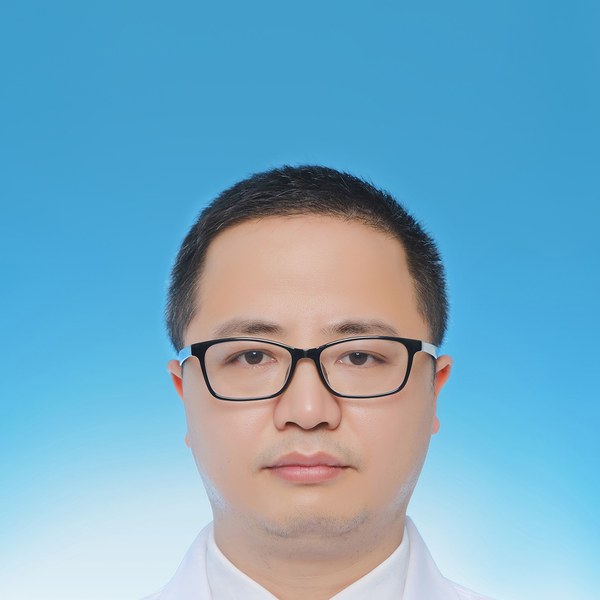
Yongbo Jia

Yongbo Jia (贾勇波)

Deputy Director & Head of Dermatology · Vice Chief Physician, Licensed Aesthetic Attending · Lead Physician of This Site

Dermatology of pigmentation · pigment depth and pattern, including melasma and post-inflammatory marks · the medical causes behind a change in skin colour

Dr. Yongbo Jia is Deputy Director of the Plastic Surgery & Aesthetics Medical Center and head of its dermatology service at Chongqing West District Hospital, and he is the physician responsible for this site. A vice chief physician and licensed aesthetic attending, he graduated from Chengdu University of Traditional Chinese Medicine and trained in dermatology at the Institute of Dermatology, Chinese Academy of Medical Sciences, and at Chongqing Hospital of Traditional Chinese Medicine.

On this site his part is the diagnosis rather than the device. He takes the history that separates sun-driven pigment from melasma from marks left by inflammation, examines what the skin does under pressure and under raking light, and estimates how deep the change sits and therefore which rungs of the ladder are worth attempting at all. He treats the barrier and the protection first, because pigment work done on irritated or unprotected skin is work that has to be repeated, and he looks for the hormonal, thyroid, metabolic and medicine-related causes that change skin colour without any skin disease being present. Where a lesion needs an explanation rather than a lightening plan, he says so and deals with it on its own terms. His stated discipline is that the category and the depth come before the treatment, not after it.

Clinical focus

  • Separating sun-driven pigment, melasma, post-inflammatory marks and vascular redness
  • Judging pigment depth, and what that rules in or out of the plan
  • The history that finds hormonal, thyroid and medicine-related causes of colour change
  • Recognising the lesions that need diagnosis rather than cosmetic treatment
  • When a device is worth the downtime for pigment, redness or texture

Academic roles & achievements

  • Member, Jiusan Society
  • Member, Chongqing Integrative Medicine Skin & Beauty Committee
  • Advanced training at the Institute of Dermatology (Chinese Academy of Medical Sciences) and Chongqing Hospital of Traditional Chinese Medicine

Category before cream

The commonest reason a pigment plan fails is not the product, it is the category. Redness from vessels is not melanin and does not answer to pigment-directed treatment; texture does not answer to it either, because it changes how skin reflects light rather than what colour it is. Money and months are lost to that mismatch more often than to bad products, and one examination usually settles which category you are in.


Shaoliang Wang

Shaoliang Wang (王韶亮)

Director, Plastic Surgery & Aesthetics Medical Center · Vice Chief Physician, Associate Professor, Doctor of Medicine

Center leadership · medical standards and complex cases

Dr. Shaoliang Wang is Director of the Plastic Surgery & Aesthetics Medical Center at Chongqing West District Hospital. Within the team he provides the surgical perspective and the tertiary-hospital backstop — the assessment when an operation is the honest answer, and the hospital-level care for the rare complication that needs it.

Within this site his part is the standard the plan has to meet and the backstop behind it. Where a colour change turns out to have a systemic cause, or where a device has left skin reactive, the case is handled within this part of the service.

Clinical focus

  • Center leadership and multidisciplinary case review
  • Surgical assessment when an operation is the honest answer to descent or excess skin
  • Hospital-based care for the rare complication that needs theatre-level management
Tongchun Mao

Tongchun Mao (毛彤春)

Deputy Director & Head of Aesthetic Surgery · Vice Chief Physician, Licensed Aesthetic Attending

Aesthetic surgery · referral when the answer is not dermatological

Dr. Tongchun Mao is an aesthetic surgeon within the Plastic Surgery & Aesthetics Medical Center at Chongqing West District Hospital. Within the team his role is refinement and honest referral: he is the person who says so when an operation will do better than an injectable or a device.

Within this site his part is the assessment of a face whose unevenness has a structural contribution — volume loss or contour that changes how light falls — and the judgement that an operation is not appropriate while the skin itself is still actively pigmenting.

Clinical focus

  • Aesthetic surgical assessment and refinement of contour and asymmetry
  • Honest referral when surgery outperforms a course of injections
  • Shared case planning within the four-physician team
Ke He

Ke He (何锞)

Deputy Director & Head of Skin & Laser Aesthetics · Attending Physician, Licensed Aesthetic Attending

Skin and laser aesthetics · device selection and skin preparation

Dr. Ke He is Deputy Director and head of skin and laser aesthetics within the Plastic Surgery & Aesthetics Medical Center at Chongqing West District Hospital. Within the team her role is the device and injectable assessment, and the honest referral when a problem needs an operation rather than a needle.

Within this site her part is the device: matching the light, laser or peeling category to the cause and the depth, judging how much downtime and how much irritation a particular skin will tolerate before it marks, and preparing skin so that the work done on it is not undone by barrier damage.

Clinical focus

  • Device and injectable assessment before any treatment plan
  • Staged planning judged against standardised photographs
  • Honest referral when a problem needs an operation rather than a needle

Start with the category, not the cream

Arrange a dermatological assessment. We will establish which of the three causes is behind the unevenness and how deep it sits, explain what treatment can and cannot even out, and set out the options including doing nothing.

Contact the Team